Seasearch is a project for volunteer divers who are interested in what they see underwater and want to help protect the marine environment in the UK...they enable divers to do something positive with the information they gather on their dives.
Seasearch aims to "map the various types of sea bed found in the near-shore zone around the whole of the Britain and Ireland. In addition, recording what lives in each area, establishing the richest sites for marine life, the sites where there are problems and the sites which need protection."
Citizen Science meets Citizens of the Sea...what projects like this exist where you are? Please share them here.
DiveNation

citizens of the sea
Thursday, 21 April 2011


Cute film
I'm sure we've all dived on occasion and seen people behaving irresponsibly...if only everyone had to watch this before they got in the water...
Caribbean Marine Etiquette PSA from For The Sea Productions on Vimeo.
Caribbean Marine Etiquette PSA from For The Sea Productions on Vimeo.
For the Sea Productions and the National Oceanic and Atmospheric Administration (NOAA) has just released this award winning short film. They are targeting scuba divers visiting the USVI and Puerto Rico and the film takes a Nemo approach, allowing marine life to talk to the viewer, making the message more fun and accessible.
Footage for this film was gathered by Livnat and his crew over the course of seven months and several hundred dives in the USVI and Puerto Rico.
You can see more For the Sea Productions here.
Footage for this film was gathered by Livnat and his crew over the course of seven months and several hundred dives in the USVI and Puerto Rico.
You can see more For the Sea Productions here.
Tuesday, 19 April 2011
Japan, Hawaii, The Great Pacific Garbage Patch...what do they all have in common?
Beyond the devastation already reeked in Japan itself, the impact of the Japanese tsunami will be felt around the world and for many years to come.
Researchers at the International Pacific Research Center at the University of Hawaii at Manoa are tracking the tsunami debris from Japan. They're using real time satellite data from 15,000 drifting buoys and what they know about ocean currents. You can view the animated projection of the debris here and see it hitting Hawaii below.


They expect the first debris will hit the main Hawaiian Islands in about two years. Then in five years it will double back and hit Hawaii again and ultimately end up in the Great Pacific Garbage Patch, just north of Hawaii.
Think of Hawaii and you think of a diving paradise; but this is a paradise next to the biggest dump in the world and when the tsunami debris hits, it’s going to get a lot bigger.
But it’s not just Hawaii; it will make landfall at Washington, Oregon and California before hand.
Can anyone know the full extent of the impact this will have on the marine eco-systems of these areas? And what steps, if any, are being taken to minimize the damage?
Citizen Science & Citizens of the Sea
In the latest issue of The Undersea Journal (sorry, only available to PADI Pro’s) and in connection with the forthcoming re-launch of Project Aware, I read that “a lot of people want to get involved” in ocean conservation and projects, but don’t know where to start.
PADI Master Instructor Katy Bloor is quoted saying “our customers want to be able to sign more petitions, campaign more, write to their Ministers of Parliament, but they wouldn’t know where to start. They have loved being able to sign the current shark petition, but it has left them and me hungry for more opportunity to do some good”. No doubt, @projectaware will go some way towards filling that space...but is there another way?
Danielle Vention of EGEE talks about the new age of Citizen Science…how emerging technologies are enabling everyday people to contribute to scientific research and projects they are passionate about.
”We are entering an age where all types of people can also contribute to many types of information. A school bus driver in rural Romania may be part of a biomedical research project. Or a banker in Los Angeles might moonlight as a collaborator in an astronomy project – classifying galaxies in her spare time”
You can read the full article here, but could we, divers, citizens of the sea, not do the same?
What do you think?
What prevents you from getting more involved?
What needs to happen to make it easy to get more involved?
PADI Master Instructor Katy Bloor is quoted saying “our customers want to be able to sign more petitions, campaign more, write to their Ministers of Parliament, but they wouldn’t know where to start. They have loved being able to sign the current shark petition, but it has left them and me hungry for more opportunity to do some good”. No doubt, @projectaware will go some way towards filling that space...but is there another way?
Danielle Vention of EGEE talks about the new age of Citizen Science…how emerging technologies are enabling everyday people to contribute to scientific research and projects they are passionate about.
”We are entering an age where all types of people can also contribute to many types of information. A school bus driver in rural Romania may be part of a biomedical research project. Or a banker in Los Angeles might moonlight as a collaborator in an astronomy project – classifying galaxies in her spare time”
You can read the full article here, but could we, divers, citizens of the sea, not do the same?
What do you think?
What prevents you from getting more involved?
What needs to happen to make it easy to get more involved?
Sunday, 17 April 2011
360 dives
Have you ever had a 360° dive? For those of us not diving every day, they probably occur every 100 dives or so, if we’re lucky.
It was 2008, the dive started with a ripping speed boat to a tiny dot in the ocean...gradually, minute by minute, the dot became Sipadan and the 360° divespot was the “drop off”.
All dives at Sipadan are amazing...as a dive location, it’s consistently up there in the top 10. We had been diving here for two or three days when we dived the “drop off”.
As the name suggests, it’s a wall dive... but the “drop off” plummets to over 900m...with viz typically 30m +, you feel like your diving into the abyss.
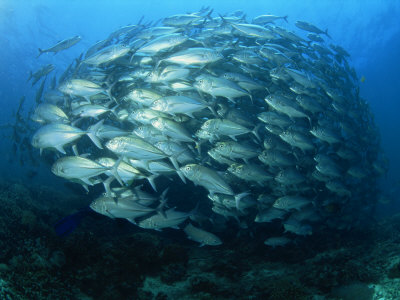
Keeping the reef wall on our right, we set off, quickly encountering five black tip reef sharks patrolling the reef at about 25m. Looking up, someone pointed out the turtle flying over, but we were distracted by the enormous table corals all around. We soon encountered a shoal of Jacks which we were led through...they parted like a crowd making way for Royalty! The viz deteriorated and the current picked up; we were headed for Barracuda Point and it didn’t disappoint. Out of the now gloomy conditions, I thought I could see a Wreck appearing, but it was a 20m tall vortex of hundreds of Barracuda. I didn’t enter that crowd! The current switched direction, the Barracuda dispersed and we headed back towards the “drop off” entry point...all the while looking up, down, back, forward, out into the blue, back to the reef...we were all pointing out the shark, the turtle, the coral, the shoals of fish, to each other...it was almost too much to take in...and so the 360° dive was born.
Share your 360° dives with DiveNation...I haven’t had one since but I’m looking forward to hearing all about yours.
Subscribe to:
Comments (Atom)